My Dog Thinks I’m Cool
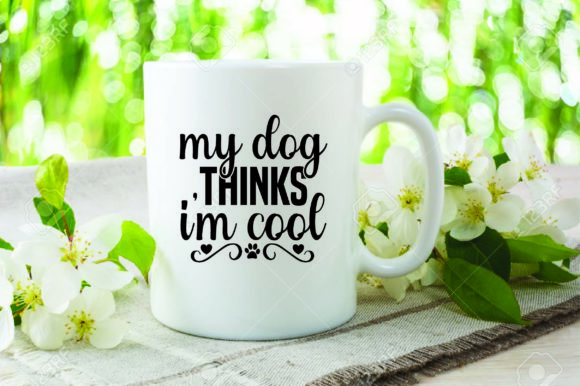
As a designer who’s stitched over 300 embroidery projects for clients—from boutique baby onesies to Etsy shop merch—I opened My Dog Thinks I’m Cool expecting charm, but what stood out immediately was its quiet confidence. It’s not loud or cartoonish; it’s warm, slightly wry, and unmistakably handmade in spirit. The phrase sits cleanly beneath a simple dog silhouette—minimal line weight, no fussy details, just enough personality to read at 2.5 inches tall. That balance makes it feel like a design built for real use, not just screen appeal.
A tote bag test: where personality meets practicality
Last week, I prepped a custom order: a linen-cotton blend tote for a local dog trainer launching her small shop. She wanted something that felt personal but professional—not cutesy, not clinical. My Dog Thinks I’m Cool landed perfectly on the lower left corner, sized to 3.2 inches wide. With medium-weight cutaway stabilizer and 40-weight polyester thread, the satin-stitched outline held crisp edges, and the fill stitch stayed smooth without puffing. Customers noticed it right away—not as “just text,” but as a quiet wink between dog lovers. That’s the sweet spot: it adds warmth without overwhelming the product’s function or the maker’s brand voice.
Where this embroidery file shines—and where it asks for care
My Dog Thinks I’m Cool works beautifully on stable, medium-to-heavy fabrics: canvas totes, cotton sweatshirts, denim aprons, tea towels, and pillow covers. Its clean letterforms and open spacing translate well into satin and fill stitches, and the dog shape avoids tight corners or micro-details that snag or blur during stitching. On baby onesies? Yes—but only with lightweight tear-away stabilizer and reduced density (I dialed mine back 15% to prevent stiffness). For caps or curved surfaces? Stick to the front panel and avoid stretching the design across seams—it’s not built for extreme distortion.
That said, tread thoughtfully on thin or stretchy fabrics like jersey tees or rayon blends. The lettering has subtle kerning that can close up if tension isn’t dialed in, and the dog’s ear detail (a single tapered curve) may feather on loosely woven fabric. Dark fabrics demand high-contrast thread—navy + bright white or charcoal + lemon yellow reads better than black-on-black. And if you’re planning layered garments (like an embroidered patch sewn onto a jacket), test how the design’s height and stitch build-up affect drape before cutting into inventory.
Real impact on your craft business—and your customers
This isn’t just a graphic; it’s a tiny trust signal. When a customer sees My Dog Thinks I’m Cool stitched cleanly on a handmade kitchen towel, it says: *This maker understands balance—between humor and craftsmanship, simplicity and soul.* That perception lifts perceived value, especially for Etsy sellers and small shop owners pricing handmade products above mass-produced alternatives. I’ve seen repeat buyers specifically ask for “the cool-dog one” on holiday gift sets—proof that recognizability builds loyalty, even with minimalist designs.
It also plays well across formats. As a digital embroidery file, it scales cleanly from 2-inch patches to 5-inch sweatshirt chest placements. As a printable mockup asset, the included PNG and SVG files let you show realistic previews fast—no pixelation, no jagged edges. And because the layout is horizontal and self-contained, it integrates smoothly into branding systems: pair it with a neutral font on a shop banner, or layer it subtly behind a logo on packaging.
Practical notes every embroidery designer should run through
- Always test first—stitch My Dog Thinks I’m Cool on scrap fabric matching your final project’s weight, weave, and stretch.
- Check thread color contrast before hooping—what looks balanced on screen may vanish on dark or textured fabric.
- Review stitch density, especially in the dog’s body fill. Overly dense areas can cause puckering on lightweight cotton or linen.
- Confirm hoop size compatibility. At standard scaling, this fits comfortably in a 4×4 hoop—but verify your machine’s native format supports the included EPS, SVG, PNG, and DXF files.
- Inspect small details under magnification: the dot in the “i,” the tail’s taper, and spacing between “Dog” and “Thinks.” These define legibility at smaller sizes.
- Test in black-and-white mockups to assess visual weight and hierarchy—this design relies on clarity, not color.
- Compare light and dark backgrounds using your actual fabric swatches, not just monitor previews.
- Use appropriate stabilizer: cutaway for knits and heavy wear items, tear-away for stable wovens, and lightweight fusible for delicate baby items.
- Verify licensing terms before selling finished embroidered products or reselling the digital embroidery file—especially if you’re an Etsy seller or digital product creator.
At its core, My Dog Thinks I’m Cool succeeds because it respects the craft. It doesn’t overpromise complexity, nor does it underserve the maker’s need for versatility. It’s a reliable, expressive, quietly confident addition to any embroidery project—whether you’re stitching a single personalized gift or building a cohesive line of dog-themed Crafts and Graphics for your small shop. In a market full of busy, overdesigned assets, this one breathes. And in embroidery, breathing space is where quality shows up.