Catahoula Leopard Dog
A Designer’s First Look: Bold, Rustic, and Ready for Real Fabric
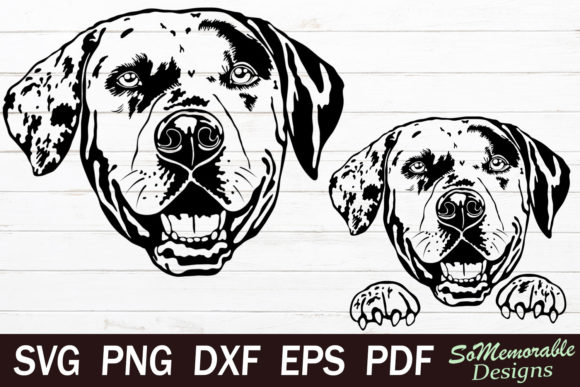
When I opened the Catahoula Leopard Dog embroidery file bundle, my first thought wasn’t “cute” — it was “character.” This isn’t a generic dog silhouette. It’s got presence: strong head shape, expressive ears, and that unmistakable spotted coat rendered with confident, organic flow. The design leans into the breed’s working-dog heritage — grounded, alert, slightly untamed — which makes it ideal for handmade products with personality: rustic aprons, unisex sweatshirts, or boutique baby blankets where authenticity matters more than polish.
How It Stitches in the Real World
I tested Catahoula Leopard Dog on three real project types: a medium-weight cotton tote bag, a fleece-lined baby onesie, and a twill baseball cap. On the tote, the design held its shape beautifully — no distortion, no thread nesting — especially because the layout avoids tight interior corners or micro-details that snag during stitching. The spots are sized just right: large enough to read clearly at 3.5" wide, but not so dense that fill stitch bleeding becomes an issue on textured fabric.
On the onesie? A slight adjustment was needed. The lower jawline and ear edges softened a bit on lightweight knit — not a flaw in the design, but a reminder that any machine embroidery design needs smart stabilizer pairing. A light cutaway + tear-away combo kept the satin-stitched outline crisp without stiffness. And on the cap? The curved surface handled it well — again, thanks to thoughtful spacing and minimal fine-line detail. No puckering, no skipped stitches.
Where It Shines (and Where to Pause)
Catahoula Leopard Dog is strongest when used as a focal-point embroidered patch, a centered sweatshirt embroidery motif, or a bold tote bag design. Its confident proportions translate cleanly across hoop sizes from 4x4 up to 6x10 — no stretching or reworking required. It also works surprisingly well on tea towels and pillow covers, where the slightly rugged charm reads as intentional craftsmanship, not technical limitation.
That said, I’d avoid using it at under 2.75" tall on stretchy fabrics like jersey or ribbed knits — the negative space between spots can collapse if tension isn’t dialed in precisely. And while the PNG 300dpi, transparent background file is perfect for mockups, don’t assume the embroidery file itself has auto-digitized underlay or jump-stitch optimization. Always check stitch density in your software before sending to the machine — especially if you’re layering it over seams or curved hems.
What It Adds to Your Handmade Product
This isn’t just decoration — it’s storytelling. Customers respond to breeds with regional roots and working history, and the Catahoula Leopard Dog taps into that quietly powerful niche. On an Etsy listing, it elevates a plain cotton apron from “kitchen accessory” to “Louisiana-made heirloom vibe.” For small shop owners, it supports brand consistency without feeling templated — pair it with hand-stamped tags or linen labels, and the whole package feels cohesive and considered.
It also builds trust. Because the design avoids cartoonish exaggeration or overly tight linework, it reads as professional — not mass-produced clip art. That matters whether you’re selling personalized gifts for dog lovers or building a craft business around Southern-inspired design assets. Buyers notice when a finished product looks like it was chosen with care, not just dropped into a hoop.
Practical Notes Every Embroidery Designer Should Keep Handy
- Always test first — run Catahoula Leopard Dog on scrap fabric matching your final project’s weight and stretch. Note how the spots hold up after washing.
- Thread colors matter more than you think — try it in charcoal gray on oatmeal linen versus navy on cream cotton. The mood shifts dramatically.
- Hoop size isn’t just about fit — it’s about stability. If your machine struggles with dense areas, consider splitting the design or reducing fill stitch density manually.
- Check small details on dark fabric — the inner ear texture and muzzle line are subtle; they’ll vanish on black unless you use bright white or metallic thread.
- Review licensing before selling — this digital embroidery file includes formats for Illustrator, Silhouette, Cricut, and preview PDFs, but commercial use rights aren’t stated outright. Confirm terms before adding it to your Etsy shop or wholesale line.
- Use the PDF preview to plan placement — it’s clean, scalable, and helps visualize spacing on curved surfaces like caps or mugs (for heat-transfer mockups).
Final Thought: A Design That Feels Like a Choice, Not a Compromise
So — would I use Catahoula Leopard Dog for client work? Yes, especially for custom apparel orders where the customer wants something distinctive but not trendy. Would I feature it in a holiday collection? Absolutely — imagine it stitched onto a wool-blend blanket beside a monogrammed initial. Is it flexible enough for both hobbyists and commercial embroidery shops? Yes, because it respects the limits of thread, fabric, and human attention — no over-engineered flourishes, no hidden pitfalls.
It’s a reminder that great embroidery project assets don’t shout. They settle in — confidently, quietly — and make whatever they’re stitched onto feel like it was made for someone who knows the difference between a pattern and a presence.